 Explo
Practical
International trip checklist: what to sort before you go
A practical checklist for international travel: passport, entry rules, health, money, phone, power and documents, on a timeline from three months out.
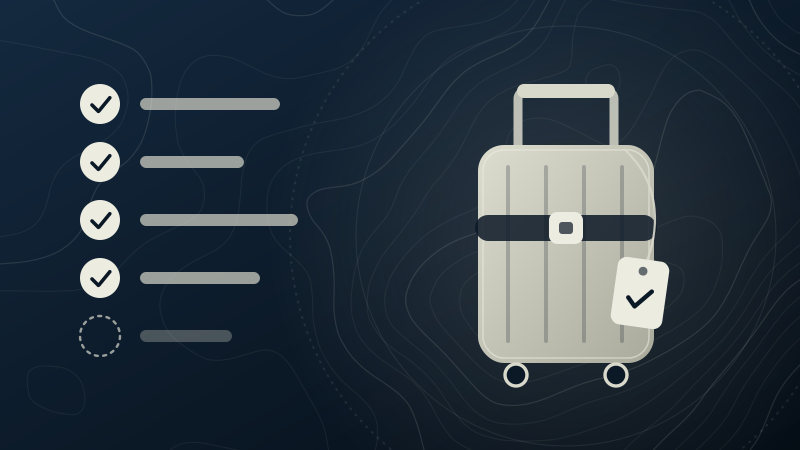
Most travel stress comes from things that were easy to sort a month earlier. A checklist doesn't make the trip better, but it moves the boring decisions out of the last night, when you're tired and your passport is somewhere in a drawer.
This list is organised by time, so you know what to do and when. Adjust it to the trip: a weekend in a neighbouring country needs far less than three weeks overseas.
Three months to one month before
- Check your passport. Look at the expiry date and compare it with the rules for your destination. Many countries want several months of validity left, and a renewal can take weeks.
- Check the entry rules. Find out whether you need a visa, an eTA or an e-visa, and start applying if you do. See how to check visa requirements before you book.
- Look into health. Check the vaccinations and health advice for your destination with a doctor or travel clinic. Some vaccines need several doses weeks apart, and a few countries ask for proof of vaccination on arrival.
- Get travel insurance. Look at medical cover, cancellation, baggage and any activities you plan, such as skiing or diving. Read what is excluded.
- Check the dates. Look at the season and at public holidays for your dates. See public holidays and travel.
- Book accommodation with a cancellation option if the plan isn't fixed.
- Driving. If you plan to drive, check whether you need an international driving permit as well as your licence.
Two to four weeks before
- Money. Check that your bank card works abroad, and know the fees for foreign payments and cash withdrawals. Bring a second card, kept separate from the first, and a little local cash.
- Phone. Decide how you'll get data: your own roaming plan, an eSIM, or a local SIM. Check that your phone is unlocked if you need a local SIM.
- Power. Check the plug type and voltage, and pack the right adapter. See travel plug types explained.
- Copies of documents. Save your passport photo page, visas, insurance policy, tickets and bookings to your phone and to cloud storage, and print one set.
- Download for offline. Maps, translation languages, boarding passes and anything else you'd miss without a signal.
- Arrival forms. Check whether the country wants an online arrival or health declaration, and when you can submit it.
- Baggage rules. Look up the airline's cabin and checked-bag limits so you don't pay at the gate.
The week before
- Check the forecast and pack for it, plus one layer for the surprise.
- Medication. Pack enough for the trip plus a few spare days, in original packaging. Some countries restrict certain medicines, so check the rules and carry a doctor's letter for anything controlled.
- Tell someone your plan. Share your itinerary and the contact details of where you're staying.
- Learn the local basics. Customs, dress, tipping, emergency number and any laws that differ from home, such as rules on photography, drones or alcohol.
- Sort home. Mail, plants, bills, and anyone who needs to know you're away.
- Check in online as soon as it opens, and check the entry rules one last time.
The day before and the day of
- Put passport, visa or travel authorisation, tickets, cards and insurance details in one bag you won't forget.
- Charge your phone, power bank and headphones.
- Keep spare lithium batteries and power banks in your cabin bag, not in your checked luggage.
- Know the address of your first night, written down or saved offline, because border officers and taxi drivers may ask.
- Leave for the airport early enough that a delay doesn't become a missed flight.
When you arrive
- Have your answers ready for border questions: where you're staying, how long and why.
- Get local currency or confirm your card works before you leave the airport.
- Connect to data and message someone that you've landed.
- If your government offers a free traveller registration service, consider signing up so it can reach you in an emergency.
After the trip
- Add the country to your map while it's fresh. See how to map every country you've visited.
- Sort your photos and write down the names of the places you loved.
- Keep receipts if you need to claim anything back.
- Note what you wished you'd packed, so the next list is better.
Keep it short and reuse it
Save this list somewhere you can copy it for each trip, and trim it to what you actually use. The goal isn't a perfect list. It is a quiet last night before you fly. Explo can help with several of these steps: entry rules, the best months, public holidays, plugs and weather are all on each country's page, so you can check them in one place. Entry rules and other details change, so confirm important points with the official source before you travel.